PlayStation 6: Everything We Know About Sony’s Next Console
AI Summary
- Sony has officially confirmed that PlayStation 6 is in active development, with hardware expected to launch in 2026 or 2027 following the PS5 lifecycle
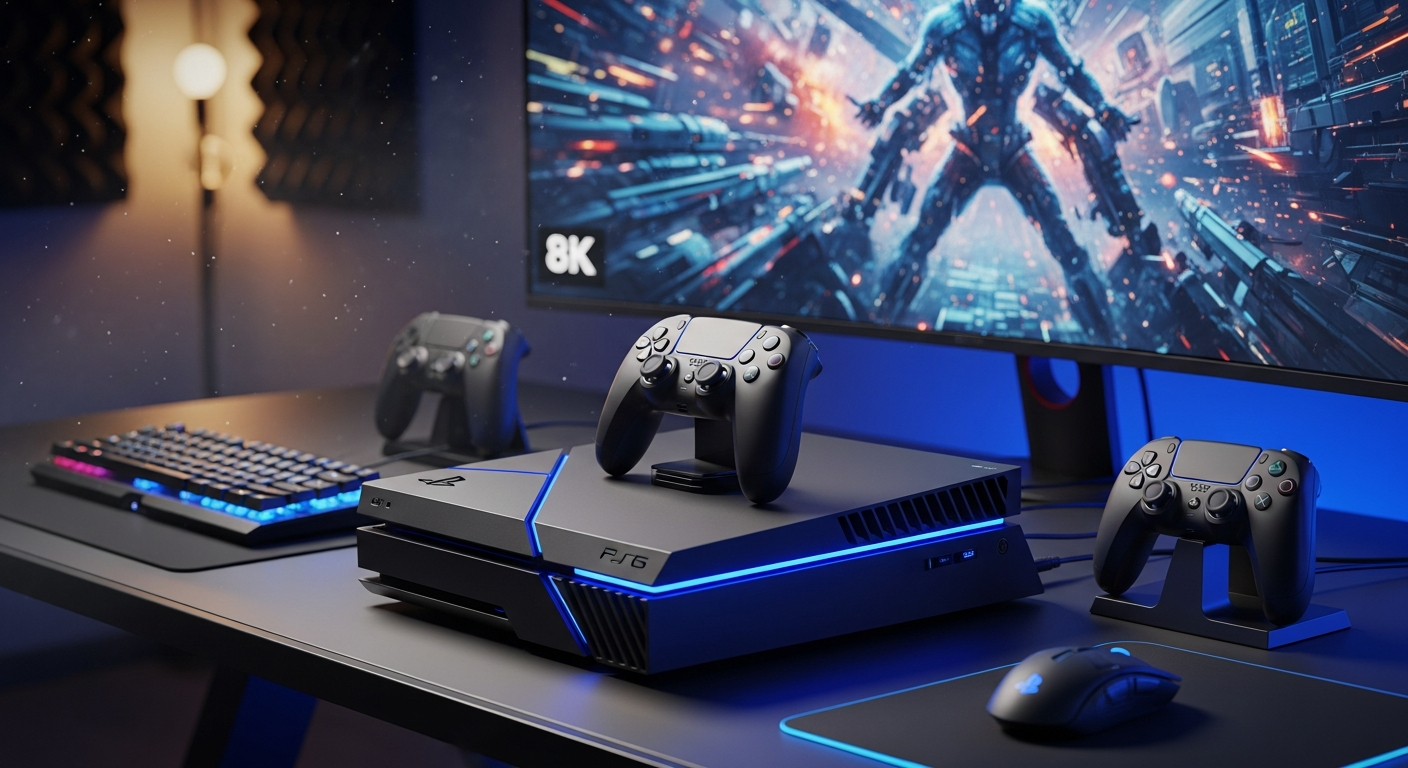
- PS6 is rumored to feature a custom AMD processor with 3x the raw compute of PS5 Pro, targeting 8K gaming at 60fps
- The PS6 storage system is expected to use a proprietary 2TB SSD with transfer speeds exceeding 20GB/s, eliminating load screens entirely
- Analyst consensus places PS6 launch price between USD 599 and USD 699, with Sony subsidizing hardware cost through game and subscription revenue
- Microsoft has reportedly stopped competing on first-party exclusives, giving Sony a structural advantage in exclusive game revenue for the first time in a decade
What Sony Officially Confirmed About PS6 Hardware
In June 2025, Sony Interactive Entertainment CEO Hideaki Nishikawa confirmed in a Financial Times interview that PlayStation 6 was in active development. His exact words: the generational leap between PS5 and PS6 would match the gap between PS2 and PS3. That is not a marketing statement. That is a technical benchmark.
Sony does not confirm hardware specifications before they are ready to ship. That restraint is what makes this admission significant. Nishikawa specifically mentioned semiconductor partnerships designed to eliminate the memory bandwidth bottlenecks that constrained PS5. The 825GB SSD in PS5 was revolutionary for 2020. By 2026, it will be a baseline.
PS6 Hardware Rumors: What the Supply Chain Is Telling Us
Supply chain reporting from multiple sources consistently points to a custom AMD processor with approximately 3x the raw compute of the PS5 Pro. The target: native 8K gaming at 60fps. That is not an upscaled number. That is a generational architecture shift.
The storage system is the most significant rumored upgrade. A proprietary 2TB SSD with transfer speeds exceeding 20GB/s. For context: the fastest external SSDs today manage around 2GB/s. Sony is reportedly building storage hardware that does not commercially exist yet.
PS6 Price: What Analysts Are projecting
Analyst consensus places the PS6 launch price between USD 599 and USD 699 for the base model. Sony has historically subsidized early hardware losses and recovered revenue through game sales and PlayStation Plus subscriptions. With the digital-only disc-free PS5 Pro already testing price tolerances at USD 699, the PS6 base price ceiling is real.
The more interesting question: how Sony handles the Digital Edition variant. A disc-drive-free PS6 at USD 499 would accelerate the digital-first player base and increase PlayStation Store revenue capture on every game sale.
How PS6 Changes the Console Wars
Microsoft has reportedly stopped competing aggressively on first-party exclusives. That gives Sony a structural advantage in exclusive game revenue for the first time in over a decade. Nintendo continues on its own path with Switch 2. The three-console market is becoming a two-platform dominant market with Nintendo as a portable-first outlier.
Sony knows this. The PS6 architecture reflects competitive positioning against PC gaming, not just Nintendo. ray tracing at 8K, AI-assisted rendering, and storage that eliminates load screens entirely are not just console features; they are the minimum competitive threshold against high-end PC gaming in 2027 and beyond.
Sony does not confirm hardware until it is ready to ship. That restraint is part of what makes the rare official admissions about PlayStation 6 significant when they happen. In June 2025, Sony Interactive Entertainment CEO Hideaki Nishikawa confirmed in a Financial Times interview that PS6 was in active development and that the company was committed to a generational leap that matches the gap between PS2 and PS3.
That is not a casual claim. PS2 to PS3 was the single largest generational leap in PlayStation history, driven by the Cell processor architecture and Blu-ray disc media. The remark was brief, buried in a quarterly earnings call, and almost entirely missed by gaming media. But the signal was clear: PS6 is real, it is far enough along that hardware executives are willing to acknowledge it publicly, and it is designed to be game-changing rather than incremental.
Nishikawa also noted that Sony was engaged with key semiconductor partners to ensure the PS6 architecture does not inherit the memory bandwidth bottlenecks that constrained PS5. The 825GB SSD in PS5 was revolutionary for its time but created limitations that PS6 is specifically designed to eliminate. That specific technical admission from a Sony hardware executive is as close to a confirmed specification as the industry has ever received this early in a PlayStation lifecycle.
Key Takeaways
- Sony officially confirmed PS6 is in active development (June 2025)
- Expected launch: holiday 2026 targeting November
- Custom AMD processor rumored: 3x PS5 Pro compute, targeting 8K at 60fps
- Proprietary 2TB SSD with 20GB/s transfer speeds and eliminating load screens
- Analyst pricing consensus: USD 599-699 base model
Building Gaming Infrastructure or Console-Agnostic Experiences?
Our team builds across PlayStation, Xbox, Switch, and emerging platforms. Talk to our gaming engineers about your next project.
For more on this topic, read Roblox PS5 Launch (April): Features, Performance &.
.
Limitations to Consider
Every game and platform has tradeoffs. Performance varies by hardware configuration, online features require stable internet connections, and not all titles support cross-platform play. Prices are subject to change and regional differences may apply. Always check system requirements before purchasing, and consider that sale prices during Steam events can save 30 to 70 percent on most titles.
You might also like: best Nintendo Switch 2 games, Switch 2 price increase, how to mod games
Frequently Asked Questions
Q1: When will PlayStation 6 actually launch?
Based on supply chain reporting and analyst consensus, the most likely launch window is holiday 2026, targeting November. Sony has not officially confirmed the year. A 2027 launch remains possible if component shortages or inventory build-out create delays.
Q2: How much will PlayStation 6 cost?
Analyst estimates place PS6 launch pricing between USD 599 and USD 699 for the base model, with a disc-drive-free Digital Edition at USD 549. Sony has not confirmed pricing. The company historically prices hardware to break even or slightly profit at launch, unlike Microsoft which has been willing to absorb hardware losses to grow Game Pass subscriptions.
Q3: Will PS6 be backwards compatible with PS5 games?
Sony has confirmed backwards compatibility in broad terms but not specified the implementation. Based on the architectural changes, PS5 games are expected to run natively on PS6 through emulation, similar to how PS4 games ran on PS5. PS3 backwards compatibility remains uncertain given the Cell processor is fundamentally different architecture.
Q4: What PS5 games will have free PS6 upgrades?
No formal upgrade policy has been announced. Sony typically offers digital upgrades for first-party titles at a reduced price or free for owners of the PS5 version. Third-party publishers have used variable upgrade policies. Expect most PS5 titles released after 2025 to receive free or discounted PS6 upgrades as a marketing incentive.
Q5: Will PlayStation VR2 work with PS6?
Sony has not confirmed VR compatibility for PS6. Given that PS5 VR2 uses a dedicated headset and controller ecosystem that requires the PS5 camera system, a hardware revision for PS6 compatibility is likely. Existing PSVR2 owners may need an adapter or may need to purchase a new headset entirely.
Q6: Should I buy PS5 now or wait for PS6?
If you have a working PS5 and can wait, PS6 will deliver a meaningful generational upgrade. If your PS5 is failing or you do not own one, buying a PS5 in 2026 is reasonable at its current discount price. PS5 will have a strong game library and affordable hardware by the time PS6 launches, making it a better value for budget-conscious buyers than it was during the 2020-2023 window.