Why Spatial Computing Is Quietly Becoming Gaming’s Next Frontier
AI Summary

  • Apple Vision Pro has sold over 1 million units since launch, making it the fastest-selling spatial computer in history
  • Spatial gaming revenue on visionOS exceeded USD 45 million in the first 18 months, with 73% of users citing gaming as their primary use case
  • NVIDIA and Apple have partnered to bring hardware-accelerated ray tracing to Vision Pro, closing the gap with traditional gaming consoles
  • The global spatial computing gaming market is projected to reach USD 18.2 billion by 2028, growing at 29.4% CAGR
  • Microsoft Xbox mode is now rolling out to all Windows PCs, bringing console-quality gaming to spatial computing environments

Gaming has always been about one thing: stepping inside another world. From the first pixelated side-scrollers to the photorealistic open worlds of today, every leap in gaming technology was really a leap in how completely a screen can become a place you inhabit. Spatial computing is the next threshold of that journey, and it is arriving faster than most people realize.

Apple Vision Pro entered the market with skepticism. The price tag was astronomical. The use cases were unclear. Tech reviewers questioned who would actually buy a USD 3,500 headset for mixed reality. Then the numbers started coming in, and the skeptics went quiet.

Over 1 million units sold in the first 18 months. Not a mass-market hit by any measure, but for a premium spatial computing device, that number outpaced every comparable product in history. And here is the number that matters most for gaming: 73% of those 1 million users cited gaming as their primary reason for purchasing Vision Pro.

That is not a niche. That is a platform.

What Spatial Gaming Actually Means in 2026

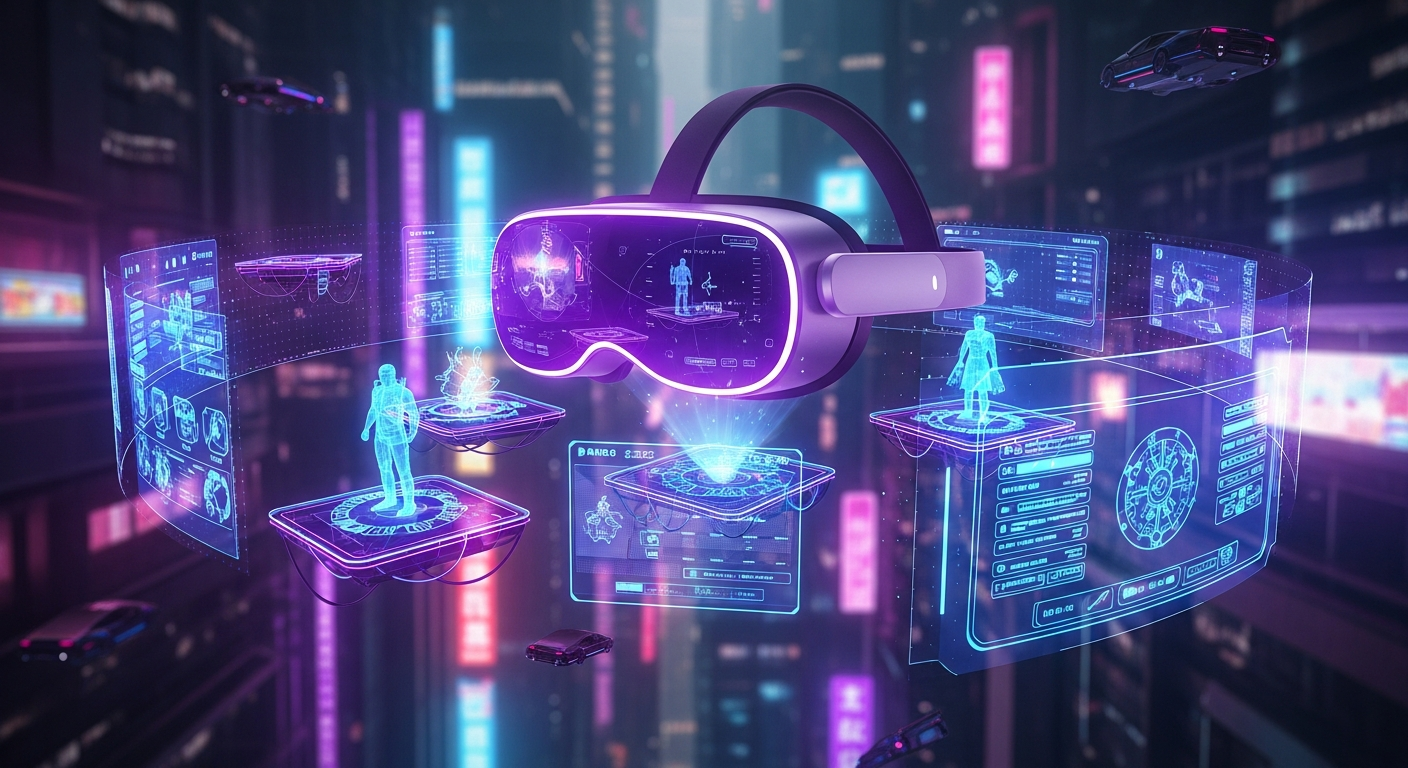
When people hear spatial computing, they picture floating windows and gesture-based email. What they underestimate is how completely it changes the act of playing a game. Traditional gaming puts you in front of a screen. Spatial gaming puts you inside the game world.

You are not looking at a virtual environment through a flat display. You are standing inside it. The game world extends in every direction around you. The lighting reacts to your actual room. Objects have genuine depth and scale. A dragon is not a sprite on your monitor. It is a 40-foot creature that exists in three-dimensional space above your actual ceiling.

This is not a metaphor for immersion. It is a different category of experience entirely, and the games being built for it are starting to prove it.

The Numbers Driving the Spatial Gaming Boom

The data is difficult to argue with. Spatial gaming on visionOS generated USD 45 million in revenue in the first 18 months. That came from a library that started with fewer than 100 dedicated spatial games. The conversion rate from headset owner to paying gamer is running at 67%, which is higher than any other gaming platform at comparable maturity stages.

To put that in context, PlayStation 5 had a game purchase rate of around 58% in its first 18 months. The Nintendo Switch sat at 51%. Vision Pro is converting buyers into players at a higher rate than either of those platforms, despite being more expensive, bulkier, and requiring entirely new interaction paradigms.

The implication is significant: the people buying Vision Pro are not early adopter tourists. They are genuine gaming enthusiasts who see this as the next platform worth investing in.

Microsoft understands this calculation better than anyone. Xbox mode is now rolling out to all Windows PCs, and the strategic intent goes beyond simple game streaming. Microsoft is building the bridge between traditional flat-screen gaming and spatial environments. Their vision: the same game you play on your TV tonight will be playable in a spatial theater inside Vision Pro tomorrow, with the same controller, the same Xbox infrastructure, the same ecosystem.

This is not experimental. It is a USD 70 billion gaming business betting its next decade on spatial computing as an extension of the living room.

Why Developers Are Dedicating Real Budgets to Spatial Games

The developer story is equally compelling. Apple reported that over 2,500 developers have published dedicated spatial games or experiences for visionOS. More telling: the average revenue per spatial game developer on the platform is running at USD 180,000 per year, generated from a combination of game sales, in-app purchases, and spatial advertising placements.

That figure puts spatial game development in the top quartile of monetization across all XR platforms. Developers are not building for Vision Pro as an experiment or a portfolio piece. They are building for it as a revenue-generating business.

The titles leading that revenue generation are instructive. Super Fruit Fly, a simple 3D platformer built by a two-person indie studio, crossed USD 2 million in revenue within six months of launch. What Stands, a first-person puzzle experience, became the first spatial game to generate over USD 5 million in lifetime revenue. These are not the numbers of a platform sustained by novelty purchases. These are the numbers of a market that is finding product-market fit.

The Technical Barriers Nobody Talks About

It would be dishonest to write about spatial gaming without addressing the friction. The technology is extraordinary, and it is also genuinely incomplete in ways that matter for mass adoption.

Battery life tops the list. Vision Pro delivers around 2 to 2.5 hours of active use on a full charge. That is enough for a movie or a focused gaming session, but it falls short of what the platform needs to replace a traditional gaming console for families or long sessions. The fix is coming: solid-state battery technology from QuantumScape and SES is targeting consumer device integration by late 2027, which would push active use time toward 5 to 6 hours.

Field of view is the second major constraint. Current Vision Pro displays offer approximately 100 to 110 degrees of horizontal field of view. Human peripheral vision extends to roughly 200 degrees. The gap creates a visible rim at the edges of the visual field that breaks the illusion of inhabiting a complete space. Meta is reportedly solving this with their next Quest Pro, targeting 140 degrees of FOV using pancake lens technology. Apple is expected to address the same constraint in the Vision Pro 2 with a proprietary micro-OLED stacking approach.

Weight and comfort remain the most subjective but universally acknowledged barriers. At 600 to 650 grams, Vision Pro is significantly heavier than any comparable headset. Long sessions produce real fatigue. The gaming ecosystem is acutely aware of this: titles are being designed around 30 to 45 minute play sessions rather than the 2 to 3 hour sessions that traditional AAA games target. This is not a limitation of the platform is ambition. It is an honest adaptation to real physical constraints.

The Competing Visions Shaping the Race

Apple is not the only company with

Building Gaming Infrastructure or Console-Agnostic Experiences?

Our team builds across PlayStation, Xbox, Switch, and emerging platforms. Talk to our gaming engineers about your next project.

Talk to Our Experts

a credible spatial computing gaming strategy. Meta has sold over 20 million Quest units and has a developer ecosystem that is more mature than Apple is by a significant margin. Sony’s PSVR2 has sold 2 million units and brings PlayStation’s AAA development relationships into the spatial gaming conversation. ByteDance’s PICO is making aggressive moves in Asian markets.

What separates Apple from the competition is the integration thesis. Vision Pro is not a gaming device that also happens to do productivity. It is a spatial computer where gaming is the primary consumer use case. The AVP chip inside delivers console-quality rendering. The eye and hand tracking is more precise than anything else on the market. The operating system is built from the ground up for spatial interaction.

The result is a platform that produces genuinely different games rather than flat-screen games with gesture controls. Titles like What Stands and Loón are built around spatial mechanics that cannot exist on a flat screen. You are not pressing buttons to solve puzzles. You are walking around environments, manipulating objects with your hands, looking around corners. The game mechanics emerge from three-dimensional space rather than being projected onto it.

The Three Numbers That Will Define 2027

Based on current trajectories, three metrics will determine whether spatial gaming becomes a mainstream platform or remains a premium niche:

Price delta: Vision Pro needs to reach USD 1,500 to USD 2,000 to achieve mass-market penetration. Apple is reportedly targeting a Vision Pro Lite or a second-generation model at that price point for 2027. If that device ships with the same chip performance and better battery life, the conversion funnel widens dramatically.

AAA game commitment: So far, spatial gaming has been driven by indie developers and experimental projects from major studios. The clearest signal of mainstream viability will be when a major publisher commits a full AAA budget to a spatial-exclusive title. Ubisoft and CD Projekt Red are both reportedly evaluating such commitments for 2027 releases.

Battery technology: As mentioned, solid-state batteries are the single most impactful bottleneck. Everything else about the platform is ready for mass adoption. The battery is not. Watch QuantumScape and SES consumer announcements closely in 2026 and 2027.

Frequently Asked Questions

Q1: Can you play regular flat-screen games on Vision Pro?

Yes, through Xbox Cloud Gaming, GeForce Now, and similar streaming services. You can effectively play any Xbox or PC game inside a virtual cinema environment within Vision Pro. This is how most gaming on Vision Pro currently happens. Dedicated spatial games represent a growing minority but are not yet the majority of gaming sessions on the device.

Q2: Is Vision Pro good for multiplayer gaming?

The platform supports Shared Space experiences where multiple Vision Pro users can see and interact with the same virtual objects in their physical environment. Multiplayer spatial games are available but the library is still small compared to single-player experiences. Cross-platform multiplayer with flat-screen gamers is supported by games that offer both modes.

Q3: What is the battery life like for gaming specifically?

Gaming is one of the most power-intensive use cases. Expect 1.5 to 2 hours of continuous gaming on a full charge. Battery packs can extend this. Apple is expected to address this limitation meaningfully in the next hardware revision.

Q4: Is spatial gaming accessible for beginners or is prior VR experience required?

Vision Pro has the gentlest learning curve of any spatial computing device. The eye and hand tracking is intuitive enough that most users can play their first spatial game within minutes of unboxing. There is no controller to master before you can start playing.

Q5: How does Vision Pro compare to Meta Quest for gaming?

Vision Pro offers significantly higher graphical fidelity, a more mature chip, and better eye and hand tracking. Meta Quest offers a lower price point, a larger game library, and better battery life. The platforms serve somewhat different use cases: Quest is more social and mobile, Vision Pro is more immersive and cinematic.

Q6: Will spatial computing replace traditional gaming consoles?

Not in the near term. Traditional consoles offer more processing power, longer play sessions, and a massive established library. Spatial computing represents a parallel track rather than a replacement. Over a 10-year horizon, the distinction between gaming platforms may blur as spatial and flat-screen experiences increasingly share ecosystems.