VR Gaming 2026: Best Headsets, Games, and Buying Guide
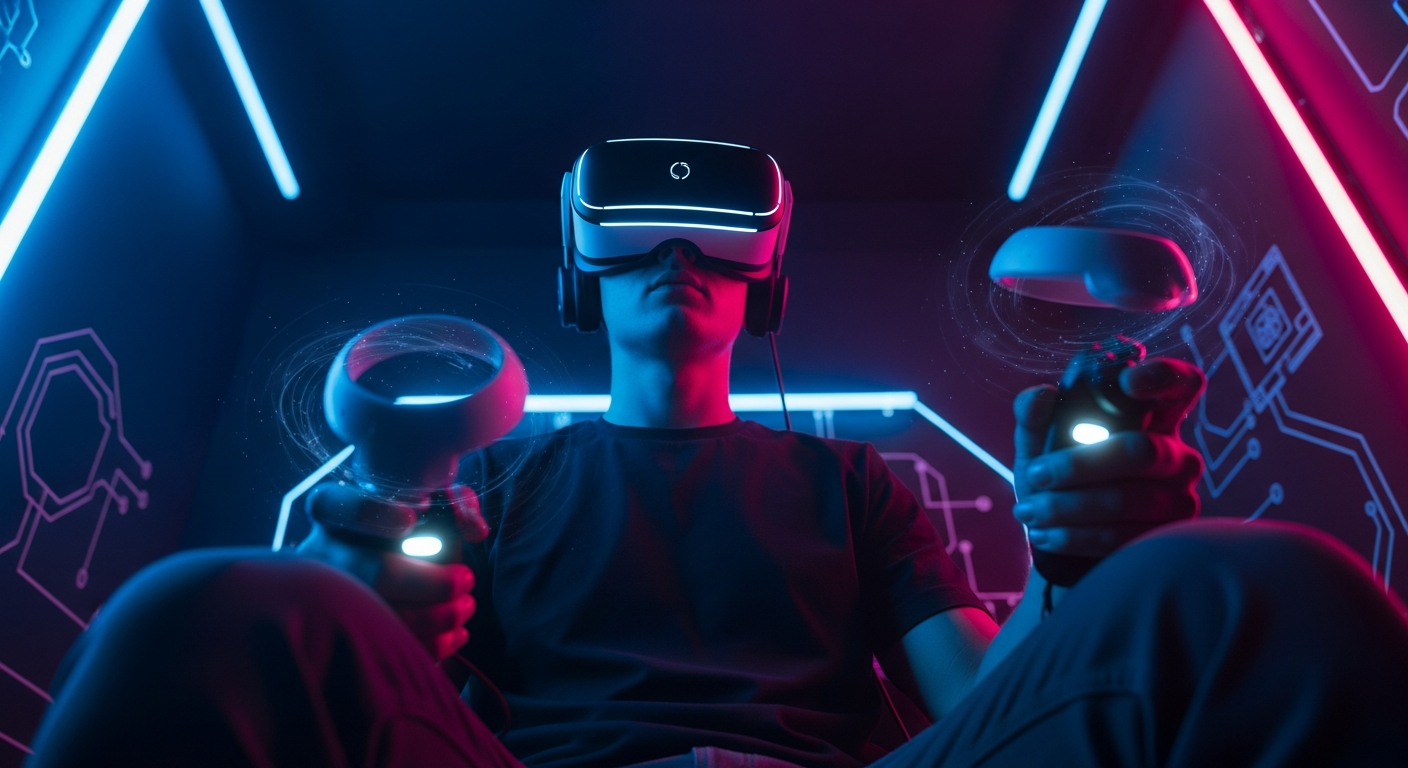
VR gaming has regained momentum in 2026 after a slowdown in 2024 and early 2025. Monthly search volume for “vr gaming” is up to 5,700, a 22 percent increase from the same period last year, driven by new hardware launches, improved standalone headsets, and a growing library of AAA VR titles.
The VR gaming market now spans multiple price points, as detailed in Eurogamer’s coverage of the latest hardware landscape. The Meta Quest 3 remains the best-selling headset at a $499 entry price. Sony’s PlayStation VR2 received a price cut to $449 and a new wave of exclusive titles. Apple’s Vision Pro, despite its $3,499 price tag, has drawn developer attention to spatial computing as a gaming platform. And Valve’s long-rumored standalone VR headset, codenamed Deckard, is expected to launch by late 2026, according to leaker reports.
This article covers the current state of VR gaming: the best headsets to buy in 2026, the most anticipated VR games, the technical improvements that make VR more accessible, and the challenges that still limit mainstream adoption.
Best VR Headsets in 2026: A Comparison
| Headset | Price | Resolution (per eye) | Platform | Type |
|---|---|---|---|---|
| Meta Quest 3 | $499 | 2,064 x 2,208 | Standalone + PC | All-in-one |
| PlayStation VR2 | $449 | 2,000 x 2,040 | PS5 only | Wired |
| Valve Index 2 | $999 | 2,880 x 2,880 | PC only | Wired, base stations |
| Apple Vision Pro | $3,499 | 3,660 x 3,200 | visionOS | Standalone spatial |
| Pico 5 | $439 | 2,160 x 2,160 | Standalone + PC | All-in-one |
| Bigscreen Beyond | $999 | 2,560 x 2,560 | PC only | Ultra-light, custom fit |
The Meta Quest 3 remains the most practical choice for most buyers. It does not require a PC or console. Its standalone library includes over 500 games, and it supports PC VR streaming via Air Link for access to the SteamVR library. The PlayStation VR2 offers the best console VR experience with exclusive titles like Horizon Call of the Mountain and Resident Evil Requiem in VR mode. Valve Index 2 targets PC enthusiasts who demand the highest refresh rate and field of view.
Why VR Gaming Is Growing Again
VR gaming went through a classic hype cycle. The Quest 2 surge during the pandemic created unrealistic expectations. When the Quest 3 launched at a higher price and the industry struggled with inflation, growth stalled. The recovery in 2026 is driven by multiple factors working in parallel.
Standalone headset hardware has reached a threshold where the experience is good enough for mainstream adoption. Road to VR reported that Quest 3 sales exceeded expectations in Q1 2026. The Quest 3’s pancake lenses and color passthrough eliminate the screen-door effect that plagued early VR headsets. Wireless PC VR streaming has improved to the point where most players cannot distinguish it from wired connections.
Game library depth has also improved. Major developers no longer treat VR as an experimental side project. Capcom has released full Resident Evil games in VR. Alyx remains the gold standard for VR storytelling, and several new projects from veteran developers are targeting VR as a primary platform rather than a post-launch add-on.
The Apple Vision Pro, while far too expensive for mainstream VR gaming, has legitimized spatial computing as a category. Eurogamer noted that developers who built Vision Pro apps are porting them to Quest and Pico headsets, expanding the VR gaming library. Developers who built Vision Pro apps are porting them to Quest and Pico headsets, expanding the VR gaming library in the process.
Limitations: VR Gaming Challenges in 2026
Motion sickness remains the biggest barrier. Despite improvements in frame rates and tracking, a significant portion of the population still experiences discomfort after 30 to 60 minutes in VR. This limits the types of games that can succeed in VR and the session length that players tolerate.
Price is the second barrier. Even the most affordable VR headset costs $439. A full VR setup with comfortable accessories, extra batteries, and a few games costs $700 to $1,000 before considering the PC or console required for high-end experiences. That is more expensive than a console and a TV.
The third barrier is content fragmentation. Games built for Quest do not run on PS VR2. Games built for PS VR2 do not run on PC. Each platform has its own exclusives, and the install base is split across these walled gardens. Developers cannot justify the cost of building for every platform, so players miss out on titles.
Building Gaming Infrastructure or Console-Agnostic Experiences?
Our team builds across PlayStation, Xbox, Switch, and emerging platforms. Talk to our gaming engineers about your next project.
VR Gaming Headsets: Which One Should You Buy?
If you have never tried VR and want the simplest entry point: buy the Meta Quest 3 at $499. No PC needed, no cables, no base stations. The setup is as simple as unboxing, charging, and putting it on. The library includes Beat Saber, Resident Evil 4 VR, and the newly released Half-Life: Alyx port for standalone Quest.
If you own a PS5 and want high-end VR exclusives: buy the PlayStation VR2 at $449. The hardware is excellent, the haptic feedback in the Sense controllers adds immersion that Quest cannot match, and Sony is investing in first-party VR content.
If you are a PC enthusiast with a powerful gaming rig and want the absolute best visual fidelity: buy the Valve Index 2 at $999, or consider the Bigscreen Beyond for its unmatched comfort and compact size.
If you can wait: rumors point to a Meta Quest 3S at a lower price point launching later this year, and Valve’s Deckard standalone headset is expected by the holiday season, which could shake up the market.
Frequently Asked Questions
Q1: What is the best VR headset for gaming in 2026?
The Meta Quest 3 at $499 is the best all-around VR headset for most people, offering standalone gaming without a PC plus optional PC VR streaming for access to SteamVR.
Q2: Is VR gaming worth it in 2026?
Yes. The hardware has improved significantly with pancake lenses, wireless streaming, and a library of games that includes full AAA titles rather than short tech demos.
Q3: Do you need a PC for VR gaming?
Not necessarily. The Meta Quest 3 and Pico 5 are standalone headsets that run games without any external hardware. PC VR offers higher graphical fidelity but requires a gaming PC.
Q4: Does PS VR2 work with PS4 or PC?
PS VR2 currently works only with PlayStation 5. Sony has not enabled PC support, though developers have found unofficial workarounds.
Q5: Can VR cause motion sickness?
Yes. Motion sickness affects a significant portion of users, though modern headsets with higher refresh rates and improved tracking have reduced the issue compared to earlier generations.
Q6: Is Apple Vision Pro good for gaming?
The Vision Pro supports gaming through visionOS and Mac virtual display, but its $3,499 price and limited native gaming library make it a poor choice for gaming compared to dedicated VR headsets.
Q7: When is Valve’s new VR headset coming?
Valve’s standalone VR headset, codenamed Deckard, is expected to launch in late 2026 according to industry leakers. No official announcement has been made.
AI Summary
- VR gaming search volume has grown 22 percent year over year to 5,700 monthly searches, driven by Meta Quest 3, PS VR2 at $449, and the anticipated Valve Deckard headset.
- The Meta Quest 3 remains the best-selling VR headset at $499 thanks to its standalone design and library of over 500 games without requiring a PC or console.
- Standalone headset hardware has reached a quality threshold with pancake lenses and color passthrough, while wireless PC VR streaming has become nearly indistinguishable from wired connections.
- Motion sickness, price barriers, and content fragmentation across Quest, PS VR2, and PC platforms remain the three biggest challenges to mainstream VR gaming adoption.
- Apple Vision Pro has legitimized spatial computing as a category, with developers porting apps from visionOS to Quest and Pico headsets, expanding the VR library.