Best Pixel Art Games in 2026: Indie Gems Every Gamer Should Play
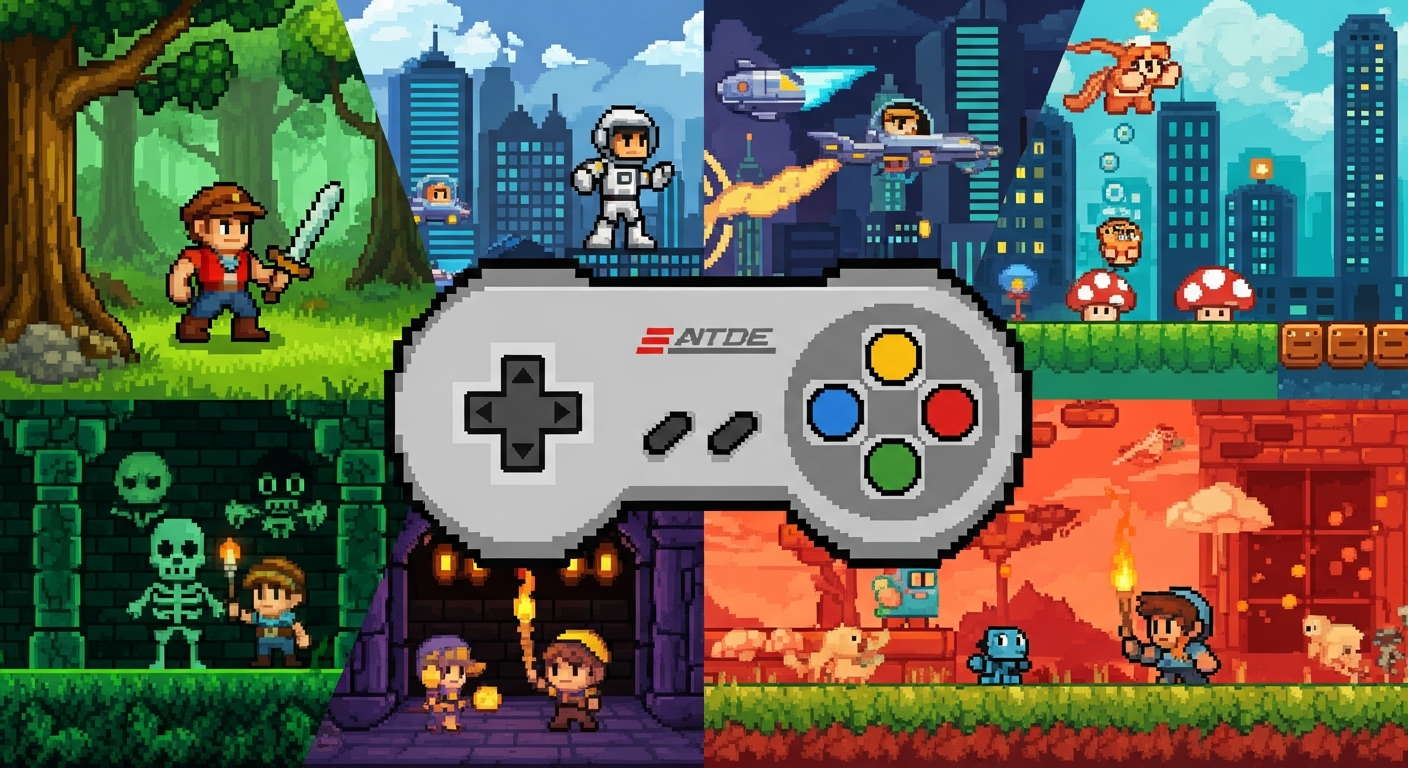
Over 400 indie pixel art games launched on Steam in 2025 alone. Most disappear within weeks. The ones that survive share a common thread: they treat every pixel as a design choice, not a limitation.
Pixel art games have outgrown their retro label. Studios like ConcernedApe (Stardew Valley) and Team Cherry (Hollow Knight) proved that hand-crafted 2D visuals can sell millions of copies. In 2026, the genre spans farming sims, precision platformers, action RPGs, and puzzle explorers.
This guide ranks the 10 best pixel art games you can play right now. Each entry includes what makes it worth your time, and where it falls short.
| Rank | Game | Genre | Steam Rating | Price |
|---|---|---|---|---|
| 1 | Undertale | RPG | 96% Positive | $9.99 |
| 2 | Stardew Valley | Farming Sim | 97% Positive | $14.99 |
| 3 | Terraria | Action-Adventure | 97% Positive | $9.99 |
| 4 | Celeste | Platformer | 97% Positive | $19.99 |
| 5 | Pizza Tower | Platformer | 98% Positive | $19.99 |
| 6 | Dave the Diver | Adventure Sim | 96% Positive | $19.99 |
| 7 | CrossCode | Action RPG | 93% Positive | $19.99 |
| 8 | Animal Well | Puzzle-Platformer | 95% Positive | $24.99 |
| 9 | The Messenger | Action-Platformer | 92% Positive | $19.99 |
| 10 | Shovel Knight | Platformer | 93% Positive | $24.99 |
AI Summary
- 10 ranked pixel art games spanning RPGs, platformers, farming sims, and puzzle explorers, with prices ranging from $9.99 to $24.99
- Stardew Valley (30M+ copies sold) and Terraria (58M+ copies) lead the genre in commercial success
- Pizza Tower holds the highest Steam rating at 98% positive, followed by Stardew Valley, Terraria, and Celeste at 97% each
- Indie solo developers like ConcernedApe (Stardew Valley) and Billy Basso (Animal Well) produced some of the genre’s highest-rated titles
- Alabaster Dawn and TetherGeist are the most anticipated upcoming pixel art games for 2026
- Most pixel art games run on low-end hardware, making the genre accessible to budget PC gamers
1. Undertale: The RPG That Changed Everything
Toby Fox built Undertale in Game Maker with sprite art that looks like a 1990s SNES game. The result: over 96% positive reviews on Steam and a cultural footprint that shaped indie development for a decade.
You play as a human child trapped in an underground monster world. The twist: you can beat the entire game without killing a single enemy. Every boss encounter has a pacifist solution that requires learning attack patterns and showing mercy.
The writing carries this game. Characters like Sans and Papyrus became internet icons. The soundtrack has over 100 million streams on Spotify. Fox composed every track himself using basic MIDI tools.
Downsides: The graphics look intentionally rough, which puts off some players. The Genocide route requires grinding that feels tedious. Combat in later areas becomes repetitive if you stick to the same approach.
2. Stardew Valley: Farming Done Right
ConcernedApe (Eric Barone) spent four years coding Stardew Valley alone. It sold over 30 million copies across all platforms. The pixel art style creates a cozy atmosphere that keeps players returning for hundreds of hours.
You inherit a run-down farm and build it into a thriving operation. The game mixes farming, fishing, mining, and relationship building into a daily loop that feels rewarding. The 1.6 update added new farm types, festivals, and over 100 new items.
Downsides: The early game moves slowly, and some players lose interest before Year 2. Combat in the mines lacks depth compared to dedicated action games. The relationship system can feel shallow after multiple playthroughs.
3. Terraria: Infinite Sandbox Content
Terraria has sold over 58 million copies, making it one of the best-selling games of all time. Re-Logic continues releasing free updates 13 years after launch. The pixel art world generates procedurally, so no two playthroughs feel identical.
The game blends building, crafting, and boss fights into a 2D sandbox. You start by chopping trees and end by fighting moon lords with laser guns. The progression curve spans over 500 items and dozens of biomes.
Downsides: The learning curve steepest when you first enter Hardmode. Enemy scaling can feel unfair without proper gear. The lack of tutorials means new players often miss core mechanics for hours.
4. Celeste: Precision Platforming at Its Best
Celeste won Best Independent Game at The Game Awards 2018. Its pixel art style uses a limited color palette that shifts with each chapter. The controls feel tight enough to support speedruns under 30 minutes.
You climb Mount Celeste as Madeline, a young woman battling anxiety and depression. The story handles mental health themes with honesty. Over 700 hand-crafted screens test your platforming skills across eight chapters.
The Assist Mode lets you adjust game speed, stamina, and dash counts. This makes the game accessible without removing the challenge for skilled players. The B-side and C-side levels provide brutal optional content.
Downsides: Some later levels demand frame-perfect inputs that frustrate casual players. The story, while well-written, takes a backseat to gameplay in the middle chapters. The art style, though beautiful, uses fewer pixel art techniques than other entries on this list.
5. Pizza Tower: Pure Platforming Joy
Pizza Tower earned a 98% positive rating on Steam, making it one of the highest-rated games on the platform. The art style channels Wario Land with exaggerated animations and a hand-drawn look that runs at full speed.
You play as Peppino, a stressed pizza chef running through levels to save his restaurant. The movement system rewards momentum. You build speed, chain combos, and slam through enemies in a flow state that few platformers match.
Each of the five worlds contains multiple levels with unique mechanics. The boss fights rank among the best in the genre. The combo system gives each level a score-chasing element that extends replay value.
Downsides: The humor leans heavily on internet memes that may age poorly. Some levels feel padded with filler rooms. The game has no difficulty options, which locks out less skilled players from later content.
6. Dave the Diver: Two Games in One
Dave the Diver sold over 10 million copies in its first year. Mintrocket combined deep-sea diving with restaurant management in a pixel art package that earned a 96% positive Steam rating.
By day, you dive into a mysterious Blue Hole to catch fish and discover secrets. By night, you run a sushi restaurant, serving customers and upgrading your menu. The loop between these two modes keeps the gameplay fresh across 30-plus hours.
Downsides: The restaurant management gets repetitive after the first 15 hours. Some diving sections feel slow when you need specific rare fish. The story takes strange turns in the final act that divide player opinion.
7. CrossCode: The Hidden Gem Action RPG
CrossCode took seven years to develop by a small German studio. It combines top-down action combat with puzzle dungeons in a fictional MMO setting. The pixel art features detailed animations that rival games with much larger budgets.
You play as Lea, a mute character navigating a virtual world called Shadoon. The combat mixes melee attacks, ranged projectiles, and elemental abilities. Each dungeon contains environmental puzzles that require spatial reasoning.
Downsides: The game runs 40 to 60 hours, which feels long for the story it tells. Some puzzle rooms repeat mechanics without adding new twists. The MMO framing device creates confusion about what is real within the game world.
8. Animal Well: A Puzzle Box Masterpiece
Animal Well launched in 2024 to universal acclaim. Billy Basso built the entire game alone over seven years. The pixel art uses lighting and particle effects to create an atmosphere that feels alive.
You explore a mysterious underground network filled with animals and secrets. The game has no combat. Instead, you solve environmental puzzles using items like bubbles, frisbees, and slinkies. The community discovered new layers of secrets months after launch.
Downsides: The cryptic design means some players get stuck without progress for hours. The lack of combat removes a core mechanic many platformer fans expect. The game is short at around six hours for the main path.
9. The Messenger: Two Games for One Price
The Messenger won Best Independent Game at The Game Awards 2018. Sabotage Studio created a game that shifts from 8-bit to 16-bit pixel art mid-playthrough. This visual trick serves the time-travel narrative.
The first half plays like a linear Ninja Gaiden tribute. The second half opens into a Metroidvania where you revisit areas with new abilities. The writing uses humor that lands more often than it misses.
Downsides: The backtracking in the second half feels tedious in some areas. Combat depth plateaus after you unlock the core moves. The humor relies on fourth-wall breaks that annoy players who prefer serious narratives.
10. Shovel Knight: Retro Perfection
Shovel Knight raised $311,000 on Kickstarter and delivered four full campaigns. Yacht Club Games created a pixel art style that looks like a lost NES game with modern quality-of-life features.
The base campaign plays like Mega Man with a downward bounce attack. Each expansion adds a new playable character with unique mechanics. The level design rewards exploration with hidden rooms and collectibles.
Downsides: The base game feels short at around five hours. Some later levels spike in difficulty without warning. The retro aesthetic, while charming, limits the visual variety across the campaigns.
How to Choose the Right Pixel Art Game
Start with your preferred genre. If you want farming and relaxation, pick Stardew Valley. For action and boss fights, go with Terraria or Shovel Knight. If you value story above all else, Undertale is the clear winner.
Consider your skill level. Celeste and Pizza Tower demand precision. Stardew Valley and Dave the Diver welcome all skill levels. CrossCode sits in the middle with adjustable difficulty settings.
Think about session length. Animal Well and The Messenger work in short bursts. Stardew Valley and Terraria eat entire weekends. Dave the Diver splits into manageable daily and nightly segments.
Building Gaming Infrastructure or Console-Agnostic Experiences?
Our team builds across PlayStation, Xbox, Switch, and emerging platforms. Talk to our gaming engineers about your next project.
Limitations
This list focuses on games available on PC through Steam or similar storefronts. Some excellent pixel art games like Castlevania: Symphony of the Night remain locked to older hardware or specific platforms. Mobile pixel art games were excluded due to control limitations.
Pixel art as a visual style does not guarantee quality. Hundreds of low-effort games use pixel art as a shortcut. The games on this list earned their place through gameplay, writing, and design polish, not just aesthetics.
Prices and availability may change. Several games on this list go on sale regularly during Steam seasonal events. Check Steam for current pricing.
Sources:
You might also like: Best Metroidvania Games 2026 | Best Games for Low End PC
Frequently Asked Questions
Q1: What defines a pixel art game
A pixel art game uses intentionally low-resolution sprite-based graphics. Developers place individual pixels to create characters, environments, and animations. This differs from hand-drawn or 3D-rendered art styles. The technique dates back to early arcade and console hardware, but modern pixel art games use it as an aesthetic choice rather than a technical constraint.
Q2: Are pixel art games cheaper to make than 3D games
Generally yes, but the gap has narrowed. A solo developer can create pixel art assets with tools like Aseprite or GraphicsGale. However, high-quality pixel art with fluid animations still requires significant time and skill. Games like Hollow Knight and Animal Well took seven years to develop despite using 2D art styles.
Q3: What is the difference between roguelikes and roguelites
Roguelikes feature permanent death and procedural generation with no carryover between runs. Roguelites add persistent progression like unlocked items or stat upgrades that persist after death. Games like Hades II and Dead Cells are roguelites because they let you keep some progress between attempts.
Q4: Can pixel art games run on low-end PCs
Most pixel art games run on hardware that struggles with modern 3D titles. Games like Undertale and Celeste work on integrated graphics and older laptops. Terraria and CrossCode need slightly more power due to their larger worlds and particle effects. For more options, check our guide to the best games for low end PC.
Q5: Which pixel art game has the most content
Terraria offers the most raw content with over 500 items, dozens of biomes, and multiple difficulty modes. Stardew Valley comes second with hundreds of hours of farming, fishing, and relationship content. CrossCode provides 40 to 60 hours of story and side content in a single playthrough.
Q6: Are there upcoming pixel art games worth watching in 2026
Alabaster Dawn, the spiritual successor to CrossCode, generates significant hype. TetherGeist launches in May 2026 with precision platforming inspired by Celeste. The pixel art genre continues to attract talented indie developers who prioritize gameplay over graphical fidelity.
Q7: Do pixel art games have good replay value
It depends on the game. Terraria and Stardew Valley offer near-infinite replay value through procedural generation and multiple playstyles. Undertale rewards replays with its branching narrative paths. Celeste and Pizza Tower encourage score chasing and speedrunning. Shorter games like Animal Well have limited replay value once you exhaust their secrets.