NVIDIA ACE: How AI Powered Games Build Smart NPCs
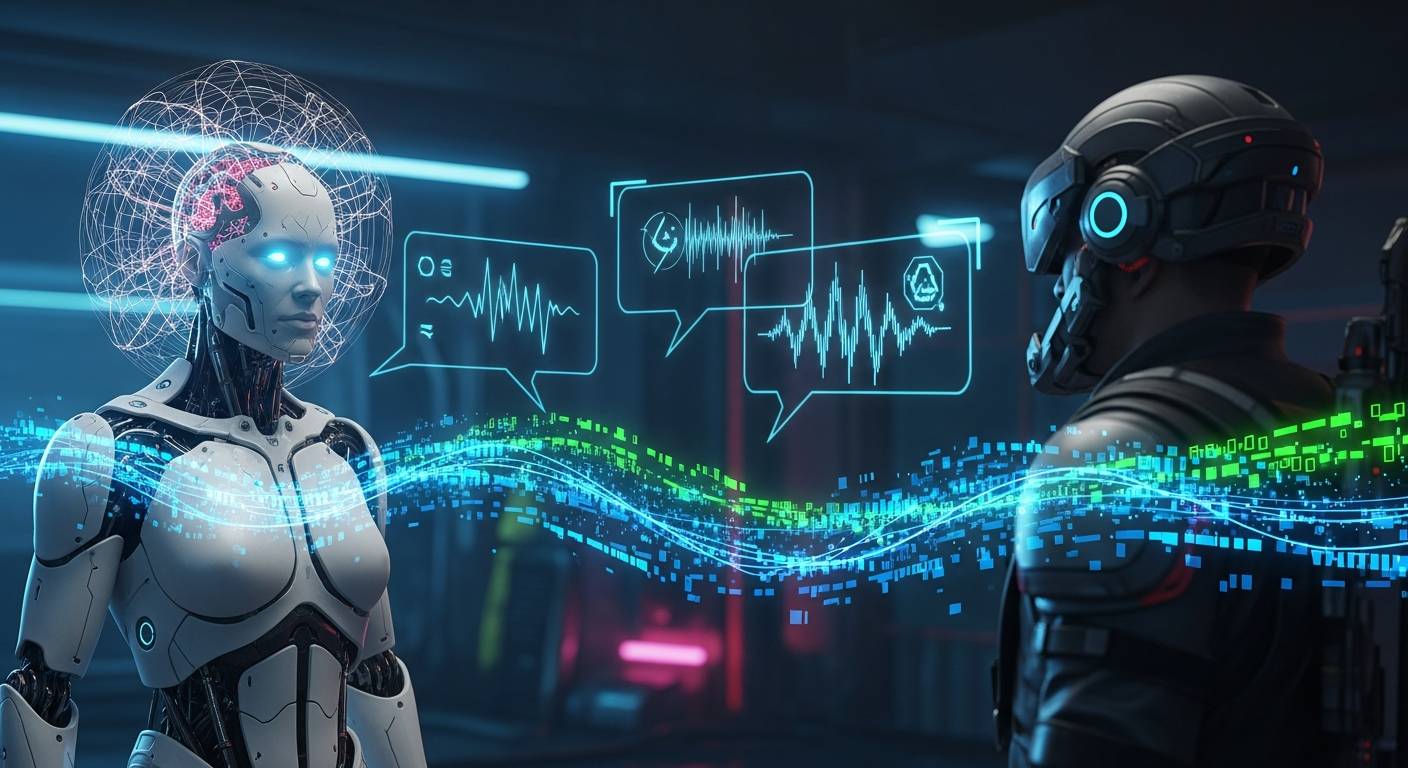
NVIDIA ACE processes NPC conversations in under 300ms. That is faster than most humans pause before responding. Over 50 games now use this technology to create characters that remember, react, and hold real conversations with players.
This guide explains how NVIDIA ACE works, what hardware you need, and why the hybrid AI approach is the only way to build NPCs that feel real without breaking your game.
AI Summary
- NVIDIA ACE combines speech, intelligence, animation, and gesture generation for real-time AI NPCs
- Over 50 games use ACE, with GeForce Now streaming AI conversations in billions of hours
- Local NPU processing requires 45 to 50 TOPS for smooth real-time NPC interactions
- Hybrid AI models balance scripted behavior with generative AI to maintain game balance
What Is NVIDIA ACE?
NVIDIA ACE stands for Avatar Cloud Engine. It is a platform that gives game developers the tools to build NPCs powered by artificial intelligence. Instead of reading from a script, ACE-powered NPCs listen to what players say, understand context, and respond in real time.
The Four Pillars: Speech, Intelligence, Animation, Gesture
ACE handles four distinct tasks. Speech processing converts player voice input to text and generates NPC voice responses. Intelligence runs the language model that decides what the NPC says. Animation drives facial expressions and lip sync through Audio2Face. Gesture generation adds body language that matches the NPC’s emotional state.
How ACE Differs from Traditional NPC Scripting
Traditional NPCs follow decision trees. A player picks option A, the NPC says line X. Every player gets the same responses. ACE-powered NPCs generate responses on the fly. They adapt to what the player says, not what the developer predicted the player would say.
Cloud vs On-Device Processing
ACE can run in the cloud or on the player’s device. Cloud processing uses NVIDIA’s data centers for heavy AI inference. On-device processing uses the player’s GPU and NPU for lower latency. Most games use a hybrid approach: simple responses run locally, complex conversations go to the cloud.
How AI NPCs Actually Work in Games
Building an AI NPC involves a pipeline of connected systems. Each step adds latency. The challenge is keeping the total response time under 300ms so conversations feel natural.
The Conversation Pipeline
When a player speaks into their microphone, the audio goes through speech-to-text conversion. The text feeds into a large language model that generates a response. That response passes through text-to-speech to create voice audio. Finally, Audio2Face converts the audio into facial animations and lip sync. Each step adds milliseconds to the total response time.
Memory and Context: How NPCs Remember Past Conversations
ACE-powered NPCs maintain conversation history. They remember what the player said five minutes ago and what quest the player completed yesterday. This memory system uses vector databases to store and retrieve relevant context. The NPC does not just respond to the current sentence. It responds based on the full relationship history with the player.
Emotional Responses Through Facial Animation
Audio2Face analyzes the NPC’s voice output and generates matching facial expressions. If the NPC is angry, the brow furrows. If surprised, the eyes widen. This happens automatically without manual animation. The system maps emotional tone to facial muscle movements in real time.
| Feature | Traditional Scripted NPCs | NVIDIA ACE AI NPCs |
|---|---|---|
| Dialogue | Pre-written, finite | Generated in real time |
| Player Input | Menu choices only | Natural voice conversation |
| Memory | Quest flags only | Full conversation history |
| Emotions | Scripted expressions | Dynamic facial animation |
| Replayability | Same responses every time | Different every playthrough |
| Development Cost | Writing thousands of lines | System integration + prompts |
Hardware Requirements for Real-Time AI NPCs
Running AI NPCs locally requires dedicated hardware. Not every player has the right setup. Understanding the hardware math helps developers decide between local and cloud processing.
NPU Processing: Why 45 to 50 TOPS Matters
TOPS stands for Tera Operations Per Second. It measures how fast a neural processing unit can run AI models. Benchmarks show that real-time NPC conversations need at least 45 to 50 TOPS on the NPU. Below that threshold, responses lag and the conversation breaks. Modern GPUs from NVIDIA and AMD exceed this requirement, but older hardware falls short.
Latency Budget: The 300ms Rule
Human conversation breaks down if response delays exceed 300ms. That is the total budget for the entire pipeline: speech recognition, language model inference, voice generation, and animation. NVIDIA ACE splits this work across GPU and NPU to stay within the budget. Cloud fallback adds network latency, so local processing is always preferred for real-time dialogue.
GPU vs NPU: Splitting Rendering from AI Inference
The GPU handles game rendering: physics, lighting, geometry. The NPU handles AI inference: language models, speech processing, animation generation. Running both on the same chip causes frame drops. ACE separates the workloads so the game stays smooth while the NPC thinks.
| NPC Complexity | TOPS Required | Latency Target | Recommended Hardware |
|---|---|---|---|
| Basic voice commands | 15 to 20 | Under 500ms | Mid-range GPU |
| Conversational dialogue | 45 to 50 | Under 300ms | NPU + dedicated GPU |
| Emotional + memory | 60+ | Under 200ms | High-end NPU + GPU |
| Multi-NPC scenes | 100+ | Under 150ms | Cloud offload required |
Games Using NVIDIA ACE in 2026
Over 50 games now integrate NVIDIA ACE. The technology spans AAA titles, indie projects, and cloud gaming platforms.
AAA Titles with AI NPCs
Major studios use ACE for flagship NPCs in RPGs and open-world games. These characters serve as quest givers, companions, and merchants. Instead of repeating the same three lines, they hold unique conversations with each player. The technology works best for characters that players interact with repeatedly over long play sessions.
Indie Games Leveraging ACE
Smaller studios use ACE through the SDK’s simplified integration path. The cloud API handles heavy inference so indie games do not require players to have high-end hardware. This democratizes AI NPCs for studios that cannot build custom AI infrastructure.
GeForce Now and Cloud-Scale AI Conversations
NVIDIA’s GeForce Now streaming service processes AI NPC conversations across billions of streamed hours. The cloud infrastructure handles the heavy lifting. Players with basic hardware can experience AI NPCs through streaming. This solves the hardware fragmentation problem for mass-market adoption.
The Hybrid AI Approach: Why Pure Generative NPCs Fail
Running a large language model unchecked in a game creates chaos. NPCs might break lore, give wrong quest information, or say things that break immersion. The solution is hybrid AI.
The Chaos Problem: When AI NPCs Go Off-Script
Pure generative AI has no guardrails. An NPC might tell the player the wrong quest location, contradict established game lore, or generate inappropriate content. In testing, unfiltered LLMs produced game-breaking responses within minutes of player interaction.
Balancing Scripted Behavior with Generative AI
The hybrid approach uses scripted behavior for critical game logic. Quest triggers, combat AI, and world rules stay deterministic. Generative AI handles only the conversational layer. The NPC can say different things, but it cannot change game state outside its defined permissions.
University of Bristol Study on Player Behavior
A major study presented at GDC 2026 by the University of Bristol examined how players interact with AI NPCs. Players treated conversational NPCs more like real characters. They spent more time in dialogue, explored more dialogue options, and reported higher immersion scores. The study confirmed that AI NPCs increase engagement when the technology works reliably.
How to Integrate NVIDIA ACE into Your Game
Adding AI NPCs to a game requires planning. The SDK provides building blocks, but the architecture decisions matter more than the code.
SDK Overview and Getting Started
The NVIDIA ACE SDK includes modules for speech recognition, language model inference, voice synthesis, and facial animation. Developers start with a reference implementation and customize from there. The SDK supports Unity and Unreal Engine through plugins.
Backend Architecture for Multiplayer AI NPCs
Multiplayer games need centralized NPC state. All players in a session must see the NPC react consistently. This requires a backend service that manages NPC memory, conversation state, and synchronization across clients. NVIDIA provides reference architectures for this pattern.
Cost Considerations: Cloud API vs Local Inference
Cloud API calls cost per request. Local inference costs hardware investment. For games with millions of players, cloud costs add up fast. Studios must calculate the break point where dedicated local hardware becomes cheaper than per-API-call pricing.
NVIDIA ACE vs AMD Ryzen AI vs Convai: NPC AI Compared
Three platforms dominate the AI NPC space. Each has strengths and trade-offs.
| Feature | NVIDIA ACE | AMD Ryzen AI | Convai |
|---|---|---|---|
| Processing | GPU + NPU hybrid | NPU-focused | Cloud-first |
| Animation | Audio2Face built-in | Third-party required | Limited |
| Memory System | Vector DB integrated | Basic | Conversation history |
| NPC-to-NPC | Limited | Not supported | Strong |
| Game Engine Support | Unity, Unreal | SDK-level | Unity, Unreal, Godot |
| Pricing | Cloud API + free SDK | Hardware-dependent | Per-minute cloud pricing |
Where NVIDIA ACE Wins
ACE has the most complete feature set. Audio2Face for animation, GeForce Now for cloud scale, and the deepest integration with game engines. The SDK is free. Cloud costs scale with usage. For studios already using NVIDIA hardware, the integration path is smoothest.
Where Competitors Have an Edge
Convai excels at NPC-to-NPC conversations. Multiple AI characters can talk to each other, not just to the player. AMD Ryzen AI focuses on on-device processing, which eliminates cloud costs entirely. Studios choosing a platform should evaluate their specific use case rather than picking the most popular option.
How AI NPCs Are Changing Game Design
AI NPCs are not just a technical upgrade. They change how designers build games.
Emergent Quests and Dynamic Storytelling
When NPCs can generate dialogue, quests can emerge from conversations. A player asks an NPC about rumors. The NPC generates a rumor based on game state. That rumor becomes a quest marker. The designer creates the system, not the individual quests.
Player Relationship Systems
AI NPCs remember every conversation. Over time, they build a relationship profile with each player. An NPC might be cold to a player who ignored them but warm to a player who helped them. This creates personalized experiences at scale.
The Role of Human Designers in AI-Driven Worlds
AI does not replace game designers. It changes what they design. Instead of writing 10,000 lines of dialogue, designers create personality profiles, knowledge boundaries, and emotional parameters. The AI fills in the details. The fun factor still needs human steering.
Building a Game with AI-Powered NPCs?
Our team implements conversational AI and NPC systems across PlayStation, Xbox, Switch, and PC. Talk to our engineers about your next project.
Limitations
AI NPCs are impressive but not perfect. Here are the main limitations developers and players should know about.
Hardware Fragmentation
Not all players have NPUs or modern GPUs. Studios must choose between requiring specific hardware, offering cloud fallback, or skipping AI NPCs for a subset of players. This fragmentation makes universal AI NPC support a multi-year challenge.
Content Moderation and AI Safety
Generative AI can produce harmful or inappropriate content. Studios need content filtering layers that catch problematic responses before players see them. This adds latency and complexity. The filtering must be tight enough to prevent abuse but loose enough to allow natural conversation.
The Fun Factor Still Needs Human Designers
AI NPCs can talk. They cannot design fun. Pacing, emotional beats, and that hard-to-pin-down feeling of a great game still need human designers steering the experience. AI is a tool, not a replacement for game design talent.
Frequently Asked Questions
Q1: What is NVIDIA ACE and how does it work
NVIDIA ACE (Avatar Cloud Engine) is a platform for building AI-powered game NPCs. It combines speech recognition, language model inference, voice synthesis, and facial animation into a real-time pipeline. The NPC listens to the player, generates a response, speaks it, and animates its face to match.
Q2: How many games use NVIDIA ACE in 2026
Over 50 games integrate NVIDIA ACE as of May 2026. These span AAA titles, indie projects, and cloud gaming platforms. GeForce Now processes AI NPC conversations across billions of streamed hours.
Q3: Do I need an NVIDIA GPU to run AI NPCs
For local processing, yes. NVIDIA ACE requires an NVIDIA GPU with NPU support for on-device inference. Cloud processing through the ACE API works on any hardware because the heavy computation runs on NVIDIA’s servers.
Q4: Can AI NPCs replace human-written dialogue
No. AI NPCs generate natural-sounding dialogue, but they do not replace human writers. Designers create personality profiles, knowledge boundaries, and emotional parameters. The AI fills in conversational details within those guardrails.
Q5: How much does it cost to add AI NPCs to a game
The NVIDIA ACE SDK is free. Cloud API costs depend on usage volume. Local inference requires hardware investment. Studios must calculate whether per-API-call pricing or dedicated hardware makes sense for their player base size.